
Australia Post Insider Tips: Mastering Zoning and Cubic Weight for 2026
 2026-03-17 07:07:432 min read
Shipping across Australia's 7.6 million square kilometers is a logistical challenge. As we move through 2026, Australia Post (AusPost) has adjusted its rates to account for rising operational costs. For Featship users, staying profitable means moving beyond "Retail Satchels" and mastering the science of Zoning and Chargeable Weight.
1. The 2026 Rate Landscape
As of mid-2026, the Basic Postage Rate (BPR) for letters has trended toward $1.85, but the real impact for e-commerce is in the 1.95% weighted increase on Parcel Post services.
- The Opportunity: While retail counter prices rise, Featship’s commercial contracts provide a "price shield." Our users continue to access Band 5 pricing—the deepest discount tier usually reserved for Australia’s largest retailers.
2. Understanding the "Zoning" Logic
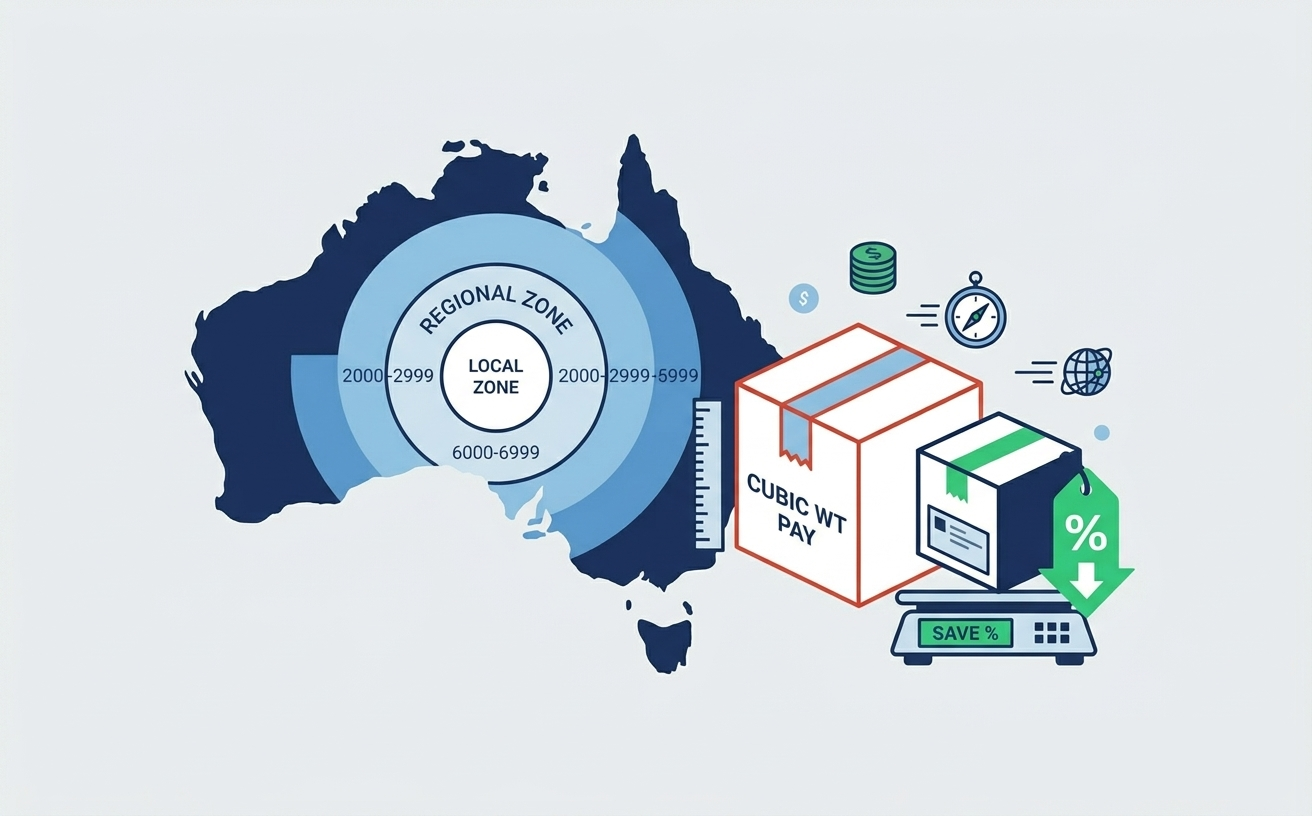
Australia Post doesn't charge a simple "flat rate" for everything. Most domestic shipments are determined by Postcode Zones.
- Zone 1 (Local/Metro): Short distances (e.g., Sydney to Sydney).
- Zone 2 & 3 (Regional/Interstate): Longer hauls (e.g., Melbourne to Perth).
Pro Tip for Featship Users:
Logistics pros often use "Zoning Tables" to predict costs. For example, if you are shipping from Melbourne (3000-3220), your "Local Zone" covers a specific range. Anything outside that becomes "Interstate." By using Featship’s automated rate calculator, you can instantly see if a package's destination falls into a higher-cost zone and adjust your customer's shipping fee accordingly.
3. The "Cubic Weight" Trap
Australia Post uses a conversion factor of 250 ($m^3 \times 250$) to calculate cubic weight.
- The Math: If you ship a large but light box (e.g., a pillow), AusPost will charge you based on its volume, not its weight.
- The Fix: Always use the smallest possible packaging. If you reduce your box height by just 2cm, you could drop an entire weight bracket and save $3-$5 per parcel.
4. Parcel Post vs. Express Post: The 2026 Strategy
With the "Express Post Network" being more strictly monitored in 2026, choosing the right service is critical:
- Parcel Post: Ideal for 3-6 day deliveries.
- Express Post: Essential for "Next Business Day" expectations.Featship Advantage: Our Express Post discounts are so deep that the gap between Standard and Express is often less than $4. Many of our sellers use this to offer "Free Express Shipping on orders over $100," a high-converting marketing tactic.
In 2026, Australian logistics is about precision. By understanding your Zoning ranges and keeping your Cubic volume low, you can turn shipping from a headache into a competitive edge.